

Highlights:
- Internal combustion (gasoline) vehicles saw a $706 increase in annual fuel costs between January and April, compared to an $11 increase for electric vehicles
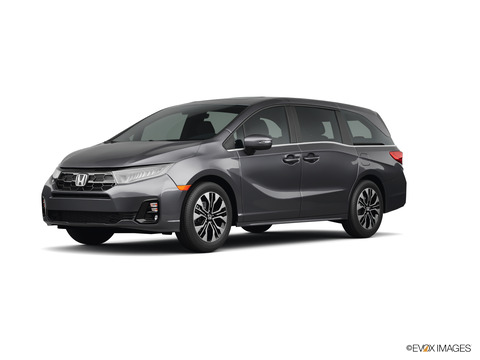
- Minivans had the highest annual fuel cost increase among major gas-powered vehicle segments, rising $1,139 between January and April
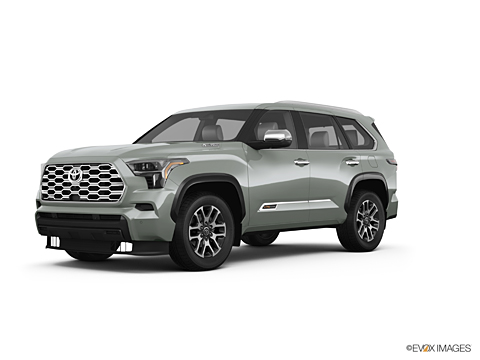
- The Toyota Sequoia had a total fuel cost increase of $1,623, the largest of any individual model in the study.
- Conventional hybrids were driven more than any other drivetrain type at 14,696 miles a year, while still costing about $700 less to fuel than gasoline vehicles.
The price of gasoline rose by nearly 46% between January 1 and April 30, 2026. But rising fuel prices are not affecting all vehicles equally. Annual fuel costs for gas-powered (non-hybrid) vehicles rose by $706 between January and April 2026, while the cost to drive EVs increased by just $11.
The biggest financial impact falls on drivers of higher use, less efficient vehicles, especially minivans, trucks, and large SUVs. For consumers choosing their next vehicle, drivetrain, body style, and annual mileage can dramatically change the cost of ownership when fuel prices rise.
iSeeCars analyzed over 2.1 million 3-year-old used cars sold in 2025 to calculate annual mileage and compare annual fuel costs using the cost of fuel (gas or electricity) in January and April 2026.
“Everyone knows fuel prices are up, but we wanted to evaluate the impact of rising energy costs on each of the major drivetrain categories, broken out by gasoline, hybrid, plug-in hybrid, and electric vehicles,” said iSeeCars Executive Analyst Karl Brauer. “You’d expect EV drivers to be largely shielded from the 30% rise in fuel prices over the past 3 months, and their $11 increase in annual fuel costs versus $706 for gasoline vehicles confirms it.”
Electric vehicles showing their advantage in the volatile world of oil prices
Gasoline-only vehicles experienced the largest increase in annual fuel costs across all drivetrain types. Internal combustion engine vehicles’ fuel costs rose from $1,533 in January 2026 to $2,240 in April 2026, an increase of $706. Conventional hybrids’ fuel costs also rose, but the increase was smaller at $486, despite having the highest average annual miles driven of all drivetrains. Plug-in hybrids and EVs were far less exposed, with PHEV fuel costs rising $279 and EVs seeing only an $11 annual increase in electric fueling costs.| Fuel Cost Increase By Drivetrain: January vs. April 2026 - iSeeCars Study | ||||
| Drivetrain | Average Miles per Year | Annual Cost of Fuel, Jan. 2026 | Annual Cost of Fuel, Apr. 2026 | $ Increase, Jan. - Apr. |
| Internal Combustion Engine Vehicles | 13,323 | $1,533 | $2,240 | $706 |
| Conventional Hybrids | 14,696 | $1,055 | $1,540 | $486 |
| Plug-In Hybrids | 11,660 | $1,385 | $1,676 | $291 |
| EVs | 11,880 | $714 | $725 | $11 |
Trucks and minivans face the biggest increases in gasoline vehicle costs
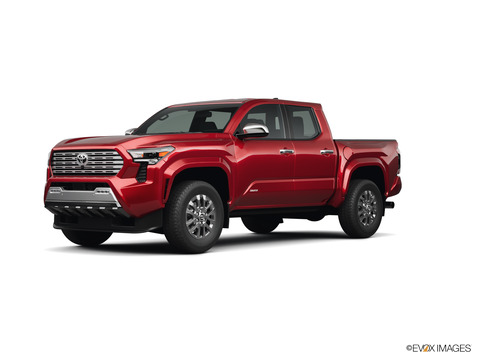
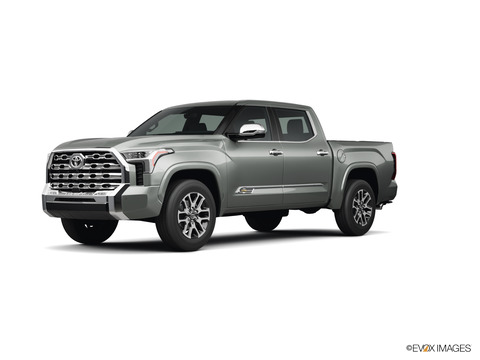
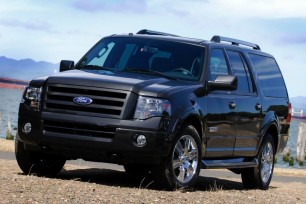
Among major gasoline vehicle segments, trucks and minivans were hit hardest by the fuel price increase. Minivans had the highest total annual fuel cost increase at $1,139, rising from $2,472 in January to $3,610 in April. That larger increase is tied to how much more minivans are driven compared to other segments, with the segment averaging 19,292 miles per year, nearly 5,000 miles more than the second-most driven segment: trucks. Minivans are often used as primary family transportation, school shuttles, road trip vehicles, and daily commuting, accounting for their high mileage. Trucks’ annual fuel costs increased by $992 over the same period. Though they are driven less than minivans, their inferior fuel economy results in higher fuel costs.| Fuel Cost Increase for Major Gas Vehicle Segments: January vs. April 2026 - iSeeCars Study | ||||
| Segment | Average Miles per Year | Annual Cost of Fuel, Jan. 2026 | Annual Cost of Fuel, Apr. 2026 | $ Increase, Jan. - Apr. |
| Minivans | 19,292 | $2,472 | $3,610 | $1,139 |
| Trucks | 14,369 | $2,154 | $3,146 | $992 |
| SUVs | 12,731 | $1,479 | $2,161 | $681 |
| Passenger Cars | 13,714 | $1,316 | $1,922 | $606 |
The Toyota Sequoia had the largest total fuel cost increase
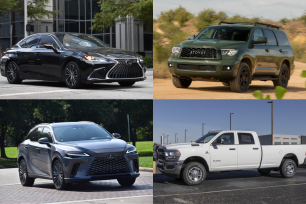
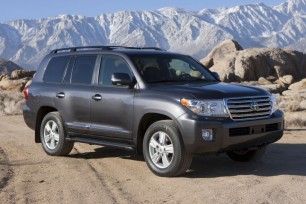
The models with the largest fuel cost increases are dominated by large, less fuel-efficient SUVs, which can create a financial burden when fuel prices climb. The Toyota Sequoia had the highest annual fuel cost increase. Its estimated fuel cost rose from $3,523 in January to $5,145 in April, a jump of $1,623. The Chevrolet Suburban had the second highest increase, with a $1,542 increase, while the Nissan Armada had a similar increase of $1,513.| Top 10 Vehicles With the Biggest Fuel Cost Increases: January vs. April 2026 - iSeeCars Study | |||||
| Rank | Model | Avg. Miles per Year | Annual Fuel Cost, Jan 2026 | Annual Fuel Cost, Apr 2026 | Fuel Cost Increase |
| 1 | Toyota Sequoia | 17,856 | $3,523 | $5,145 | $1,623 |
| 2 | Chevrolet Suburban | 19,626 | $3,347 | $4,889 | $1,542 |
| 3 | Nissan Armada | 18,098 | $3,284 | $4,797 | $1,513 |
| 4 | GMC Yukon XL | 18,734 | $3,193 | $4,664 | $1,471 |
| 5 | Chevrolet Tahoe | 16,727 | $2,860 | $4,177 | $1,317 |
| 6 | Cadillac Escalade ESV | 16,387 | $2,847 | $4,159 | $1,312 |
| 7 | GMC Yukon | 16,592 | $2,831 | $4,135 | $1,304 |
| 8 | Jeep Wagoneer | 16,975 | $2,782 | $4,064 | $1,282 |
| 9 | GMC Sierra 1500 Limited | 17,069 | $2,772 | $4,050 | $1,277 |
| 10 | Chrysler Pacifica | 20,872 | $2,682 | $3,918 | $1,236 |
| Internal Combustion Engine Vehicle Average | 13,323 | $1,533 | $2,240 | $706 | |
EVs Largely Shielded From Gas Price Spikes
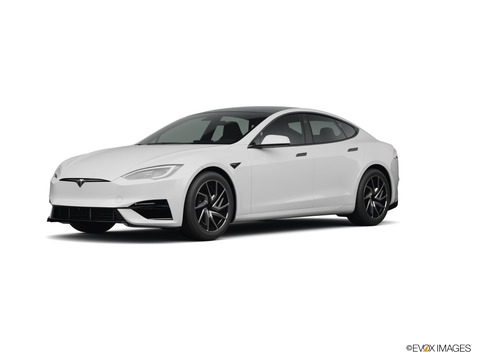
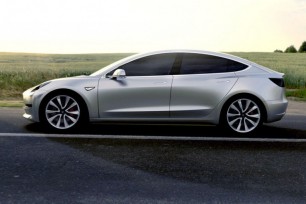
Because EVs do not use gasoline and are driven fewer miles on average, they have much lower annual energy costs than gasoline vehicles. The average annual energy cost for an EV was $725 in April, compared to $2,240 for gasoline models. That EV total is nearly the same as the $706 increase in annual fuel costs for gasoline vehicles since January.| Top 10 EVs With the Smallest Fuel Cost Increases: January vs. April 2026 - iSeeCars Study | |||||
| Rank | Model | Avg. Miles per Year | Annual Fuel Cost, Jan 2026 | Annual Fuel Cost, Apr 2026 | Fuel Cost Increase |
| 1 | Lucid Air | 6,877 | $362 | $368 | $6 |
| 2 | MINI Hardtop 2 Door | 7,695 | $472 | $479 | $7 |
| 3 | Audi RS e-tron GT | 6,461 | $505 | $513 | $8 |
| 4 | Mercedes-Benz EQB (SUV) | 8,051 | $525 | $533 | $8 |
| 5 | BMW i4 | 8,849 | $533 | $542 | $8 |
| 6 | Mazda MX-30 EV | 7,198 | $550 | $559 | $9 |
| 7 | Tesla Model S | 10,346 | $561 | $570 | $9 |
| 8 | Mercedes-Benz EQS (Sedan) | 8,271 | $562 | $571 | $9 |
| 9 | Audi Q4 e-tron | 8,567 | $569 | $578 | $9 |
| 10 | Chevrolet Bolt EV | 10,457 | $582 | $591 | $9 |
| EV Average | 11,880 | $714 | $725 | $11 | |
Non-EV Vehicles With the Smallest Fuel-Cost Increases
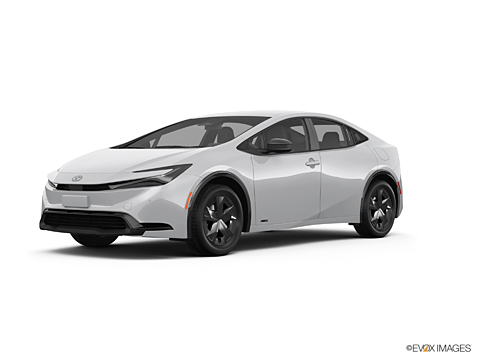
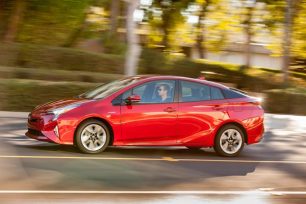
For consumers unable or unwilling to purchase an electric vehicle, plug-in hybrids had the smallest fuel-cost increases among gas-consuming vehicles, while conventional hybrids had the lowest annual fuel costs among non-EV drivetrains. Plug-in hybrid annual fuel costs increased by $291 between January and April. The Ford Mustang was the only non-plug-in hybrid in the top 10, reflecting its relatively low annual mileage of 2,092 miles per year.| Top 10 Gas-Consuming Vehicles With the Smallest Fuel Cost Increases: January vs. April 2026 - iSeeCars Study | |||||
| Rank | Model | Avg. Miles per Year | Annual Fuel Cost, Jan 2026 | Annual Fuel Cost, Apr 2026 | Fuel Cost Increase |
| 1 | Toyota Prius Prime | 12,999 | $792 | $955 | $163 |
| 2 | Hyundai Ioniq Plug-In Hybrid | 12,630 | $721 | $885 | $163 |
| 3 | Ford Escape Plug-In Hybrid | 10,785 | $824 | $1,006 | $181 |
| 4 | Kia Niro Plug-In Hybrid | 12,544 | $804 | $987 | $183 |
| 5 | Ford Mustang | 2,092 | $420 | $613 | $193 |
| 6 | Lexus NX 450h+ | 10,417 | $975 | $1,171 | $196 |
| 7 | Lincoln Corsair | 9,608 | $933 | $1,130 | $197 |
| 8 | Toyota RAV4 Prime | 13,255 | $1,110 | $1,345 | $235 |
| 9 | Volvo S60 Recharge | 10,738 | $987 | $1,224 | $238 |
| 10 | Jeep Grand Cherokee Plug-In Hybrid | 8,435 | $1,141 | $1,388 | $247 |
| Plug-In Hybrid Vehicle Average | 11,660 | $1,385 | $1,676 | $291 | |
| Internal Combustion Engine Vehicle Average | 13,323 | $1,533 | $2,240 | $706 | |
Fuel Type Should Match Driving Needs
As fuel prices continue to fluctuate, consumers should look beyond purchase price and consider how far they drive, what type of vehicle they need, and how efficiently that vehicle turns energy into miles.“Fuel price spikes can play havoc with a consumer’s monthly budget, but consumers can reduce this risk by buying a hybrid or plug-in hybrid,” said Brauer. “And, if a driver’s lifestyle and transportation needs can be fulfilled by an electric vehicle, EVs can help insulate consumers from recurring and substantial swings in fuel prices.”
Methodology
iSeeCars analyzed over 2.1 million 3-year-old used cars sold in 2025. Annual fuel costs were calculated based on each car’s average annual odometer reading and the cost of fuel in January 2026 vs. April 2026. The dollar difference in annual fuel costs as of each of those two months was used to rank drivetrains and models by their increased financial burden.
The calculation of annual fuel cost depended on the type of fuel typically used by each vehicle, but all cases assumed that a vehicle would completely empty its fuel storage before refilling:
For internal combustion and conventional hybrid vehicles, the average annual mileage was combined with each vehicle’s EPA-rated fuel efficiency to calculate the number of gallons of gas consumed each year; monthly average national gas prices of $2.81 and $4.10 in January and April 2026 were then used to calculate annual fuel costs.
For EVs, the average annual mileage was combined with each vehicle’s expected miles per charge and battery capacity in kilowatt-hours (kWh) to calculate the amount of electricity used each year. Average home charging costs of $0.192/kWh and $0.191/kWh from the Bureau of Labor Statistics (BLS), and average public charging costs of $0.38 and $0.41 from AAA, along with a blend of 86% home charging / 14% public charging, were then used to calculate annual fuel costs.
For plug-in hybrids, an assumption of 50% fully-electric driving and 50% fully-gas driving was used, along with the respective annual fuel cost calculation for each type of fuel.
About iSeeCars
iSeeCars helps millions of people make smarter car decisions and find the best deals by leveraging data-driven research and unbiased analysis. iSeeCars Research conducts independent studies that provide key insights on vehicles, market trends, and the automotive industry, including Best Cars Rankings and the annual Longest Lasting Cars Study. With the goal of making car shopping easier and more transparent, iSeeCars.com analyzes millions of car listings and offers valuable resources like iVIN Reports, Window Stickers, and Build Sheets. iSeeCars has saved users over $451 million using over 25 billion data points and proprietary algorithms to objectively analyze, score, and rank new and used vehicles.