

A missing window sticker can turn the used car shopping process into a guessing game. Without it, buyers may not know what the car originally cost, which trim and packages it came with, or whether the seller’s description matches the vehicle. For owners and sellers, a missing sticker can make it harder to document the vehicle’s original equipment or explain why one used car may be worth more than another.
A replacement window sticker may come from the manufacturer or be recreated using licensed manufacturer data. Shoppers often use window stickers to verify a vehicle’s original equipment, identify features that may affect its value, and check whether any current equipment differs from its original configuration.
While a window sticker can help confirm the vehicle’s original price, configuration, and factory equipment, it reflects the car’s status when it was brand new. It should only be used as one part of assessing a vehicle’s current market value, not as the only document a buyer relies on.
When is a replacement window sticker useful?
A listing might say a vehicle has a feature because it appears in a generic trim description, but that does not always mean the specific car has it. A replacement window sticker can be useful when the vehicle’s original equipment may affect its market value. This is particularly true for limited-production or uniquely configured vehicles where the existence of one or more features substantially impacts a car’s desirability.For buyers, replacement window stickers can help verify whether a used car actually has the options or packages mentioned in a listing. This is important for features that are easy to mistake, such as upgraded driver-assistance systems, towing packages, premium audio systems, performance packages, wheel packages, seating configurations, and appearance packages.
For sellers, a window sticker can help make a listing more credible. It gives buyers a clearer view of the vehicle’s original MSRP and factory equipment, which can be useful when explaining a higher asking price or distinguishing the car from vehicles with fewer options.
For trade-ins, a sticker can help an owner understand how the vehicle was originally configured before negotiating with a dealer. A window sticker will not determine the trade-in value by itself, but it can support a more accurate conversation about options and packages that may affect market value.
A replacement sticker can also help owners who want records for insurance, taxes, fleet documentation, or personal files. It is not a substitute for title, registration, insurance, or repair records, but it can be a useful record of the vehicle’s original configuration.
Original Monroney labels vs. recreated window stickers
The manufacturer’s window sticker placed on a new vehicle is commonly called a Monroney label. It shows the information provided for that specific vehicle when it was sold new, including legally required pricing and equipment details. Federal law requires manufacturers to affix the label to a new automobile before delivery to a dealer. A recreated window sticker is generated later using licensed manufacturer data.Window sticker availability can vary widely. Automakers may limit access, remove older stickers from public systems, or provide different levels of detail depending on the brand and model year. Some third-party services like Monroney Sticker by VIN provide original stickers for certain vehicles, especially newer models, free of charge.
How to find a missing window sticker
The first place to look for a window sticker is the paperwork associated with the car. Owners who bought a vehicle new may still have the original window sticker. If the car is being sold privately, the seller may have a scanned copy or photo, even if the original Monroney label is not available.Another place to check is the dealer who originally sold the new vehicle or a franchised dealer for the same brand. A dealer may be able to retrieve the original window sticker or provide an equipment report based on the VIN, especially for newer vehicles. This is less likely for older cars or discontinued brands.
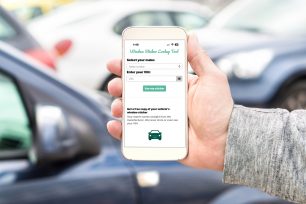
You can also check a VIN-based service like iSeeCars’ Window Sticker Lookup by VIN to find out if a window sticker is available for purchase.
When a window sticker is not available or does not include all the information you need, other VIN-based records may be able to help confirm basic vehicle details. A VIN report can help identify specifications such as trim, color, transmission type, drivetrain, engine type, and towing capacity, while a build sheet can help verify original configuration for select automakers.
Some services also offer free build sheets or VIN reports for certain vehicles, including VIN Lookup and Build Sheet by VIN.
To find a missing window sticker: Start with the VIN, ask the seller if the original sticker is available, check with a dealer, or try a VIN-based window sticker lookup, and then compare the information against the actual vehicle.
What information can a window sticker help verify?
Depending on the vehicle, model year, and brand, a window sticker may show the original MSRP, destination charge, trim level, engine, transmission, drivetrain, exterior and interior colors, standard equipment, factory-installed options, option packages, warranty information, safety ratings, and fuel economy ratings.For used-car shoppers, option verification is one of the biggest benefits of checking a vehicle’s window sticker. Two used vehicles can share the same model name and trim but differ meaningfully in drivetrain specifications, factory packages, wheels, audio systems, seating, towing equipment, driver-assistance technology, or appearance packages. A window sticker can help explain why one vehicle originally cost more than another and whether an advertised feature was likely factory-installed.
Safety information may also be included on window stickers. NHTSA’s 5-Star Safety Ratings are designed to help consumers compare vehicle safety when shopping, although not every vehicle will have every rating available and displayed on the window sticker.
What a window sticker can’t tell you
A window sticker is a snapshot of how a vehicle was originally configured when it was sold new. It may not accurately reflect the vehicle’s current configuration or condition.A car may have had equipment removed, added, damaged, or replaced after the original sale. Wheels, tires, roof racks, floor mats, cargo covers, infotainment components, and towing hardware can be changed over time. Software-enabled features can also create confusion if a vehicle’s current functionality depends on subscriptions, updates, or later changes by the manufacturer.
A window sticker also does not show what happened to a new vehicle after it was sold. The sticker can show original equipment and pricing, but it does not show title issues, theft records, severe damage, or odometer issues that may be available in a vehicle history report. Shoppers should use a window sticker to understand a car’s original configuration, then use a VIN report or history report to check what may have happened after it left the dealer’s lot.
The best approach is to compare information from multiple sources. If the window sticker says the vehicle had a factory towing package, check whether the physical equipment is present and whether the seller has documentation. If the sticker shows a driver-assistance package, test the relevant features and confirm the controls, sensors, and displays are present. If the sticker shows a premium audio system, look for the correct speaker branding, screen menus, and equipment.
How to use a window sticker when buying a used car
When you’re buying a used car , start with the VIN and use a window sticker to verify the details that matter most to you.First, make sure the VIN on the sticker matches the VIN on the vehicle, the listing, and the title paperwork. The VIN is typically visible when looking through the base of the windshield on the driver’s side and on the label inside the driver’s door frame. If those numbers do not match, the issue needs to be resolved before moving forward.
Second, compare the sticker to the listing. Look at the trim, engine, drivetrain, packages, and major options. If the listing claims a feature that does not appear on the sticker, ask the seller for documentation or inspect the vehicle closely. The feature may have been added later, may be part of the standard equipment list, or may simply be listed incorrectly.
Third, verify important equipment in person. A window sticker can help identify what should be there, but a vehicle inspection confirms what is actually there. This is especially important for drivetrain details, towing equipment, advanced safety technology, third-row seating, upgraded wheels, special trims, off-road packages, and performance equipment.
Finally, use the sticker as part of a broader shopping process. Searching used cars for sale can help you compare asking prices for similar vehicles, while a VIN report, vehicle history report, and build sheet can help fill in details the sticker does not cover. iSeeCars’ window sticker lookup, build sheet lookup, and VIN reports are natural places to connect those steps when a shopper needs more than the seller’s description.
Used correctly, a window sticker can be a helpful document when you’re buying or selling a used car. It gives shoppers and owners a clearer view of the vehicle’s original price, factory equipment, and configuration, making it easier to spot listing errors, compare similar cars, assess market value, and make a more informed, confident decision.