

Highlights:
- Martin Luther King Jr. Day is the best time to buy a used car, with 52.7% more deals than average
- New Year's Eve and New Year's Day rank second, with 48.9% more deals
- Juneteenth is the worst holiday to get a used car deal, followed by Memorial Day and Father’s Day
- December and January are the best months to buy a used car
- June and May are the worst months for used car deals
Buying a used car at the right time of year can significantly improve the odds of getting a good deal. The best months to find a deal run from November through February, with December the strongest at 46.2% more deals than average. On the other hand, it will be harder for shoppers to find a deal from April through September, with June the worst month at 28.8% fewer deals than average.
iSeeCars Research identified the best and worst times of year to get a used car deal by analyzing over 42 million used car sales from 2025 and 2026. For the purposes of this study, a used car deal is defined as a savings of at least 10% below the iSeeCars estimated fair market value. The analysis calculated the chances of finding a deal on major holidays and months of the year and compared them to the overall daily average of 11.5%. The average used car price is now $27,157, which means a deal on an average-priced vehicle would save buyers at least $2,716.
"The time of year can make a material difference in a used car shopper's chances of finding a deal,” said iSeeCars Executive Analyst Karl Brauer. “Buyers shopping during the winter months, particularly around major holidays, have a much better chance of finding a vehicle priced below its estimated market value."
Winter holidays are the best times to buy a used car
All of the top 10 times to buy a used car are within four months, from Halloween to Presidents Day. Martin Luther King Jr. Day has the most deals available, with 52.7% more deals than average. It’s followed by New Year's Eve/New Year's Day, December, and January, reinforcing the advantage of shopping during the winter.November also offers an excellent opportunity for car buyers. Thanksgiving/Black Friday, Veterans Day, and the month of November all provide more than a 31% higher chance of finding a deal.
| Top 10 Best Times To Buy a Used Car - iSeeCars Study | ||
| Rank | Time of Year | % More Deals than Average |
| 1 | MLK Day | 52.7% |
| 2 | New Year's Eve/New Year's Day | 48.9% |
| 3 | December | 46.2% |
| 4 | January | 44.1% |
| 5 | Christmas Eve | 41.2% |
| 6 | Thanksgiving/Black Friday | 34.8% |
| 7 | Presidents Day | 34.3% |
| 8 | Halloween | 33.2% |
| 9 | Veterans Day | 32.9% |
| 10 | November | 31.7% |
Juneteenth, June, and May are the worst times to buy a used car
While late fall and winter offer the strongest opportunities for used car deals, that changes in late spring and summer. Six of the 10 worst times to buy a used car are in May and June alone, with Juneteenth ranked as the worst holiday at 30.7% fewer deals than average. Other holidays when it’s harder to find deals are Memorial Day, Father’s Day, July 4th and Mother’s Day.| Top 10 Worst Times To Buy a Used Car - iSeeCars Study | ||
| Rank | Time of Year | % Deals Compared to Average |
| 1 | Juneteenth | -30.7% |
| 2 | June | -28.8% |
| 3 | May | -28.2% |
| 4 | Memorial Day | -27.8% |
| 5 | Father's Day | -26.8% |
| 6 | July 4th | -26.5% |
| 7 | Mother's Day | -26.3% |
| 8 | July | -25.0% |
| 9 | April | -21.6% |
| 10 | August | -11.8% |
Best and worst holidays to buy a used car
Winter versus summer holidays offer vastly different opportunities when it comes to finding used car deals. The strongest holidays are concentrated in the fall and winter, while several spring and summer holidays rank among the least favorable shopping periods.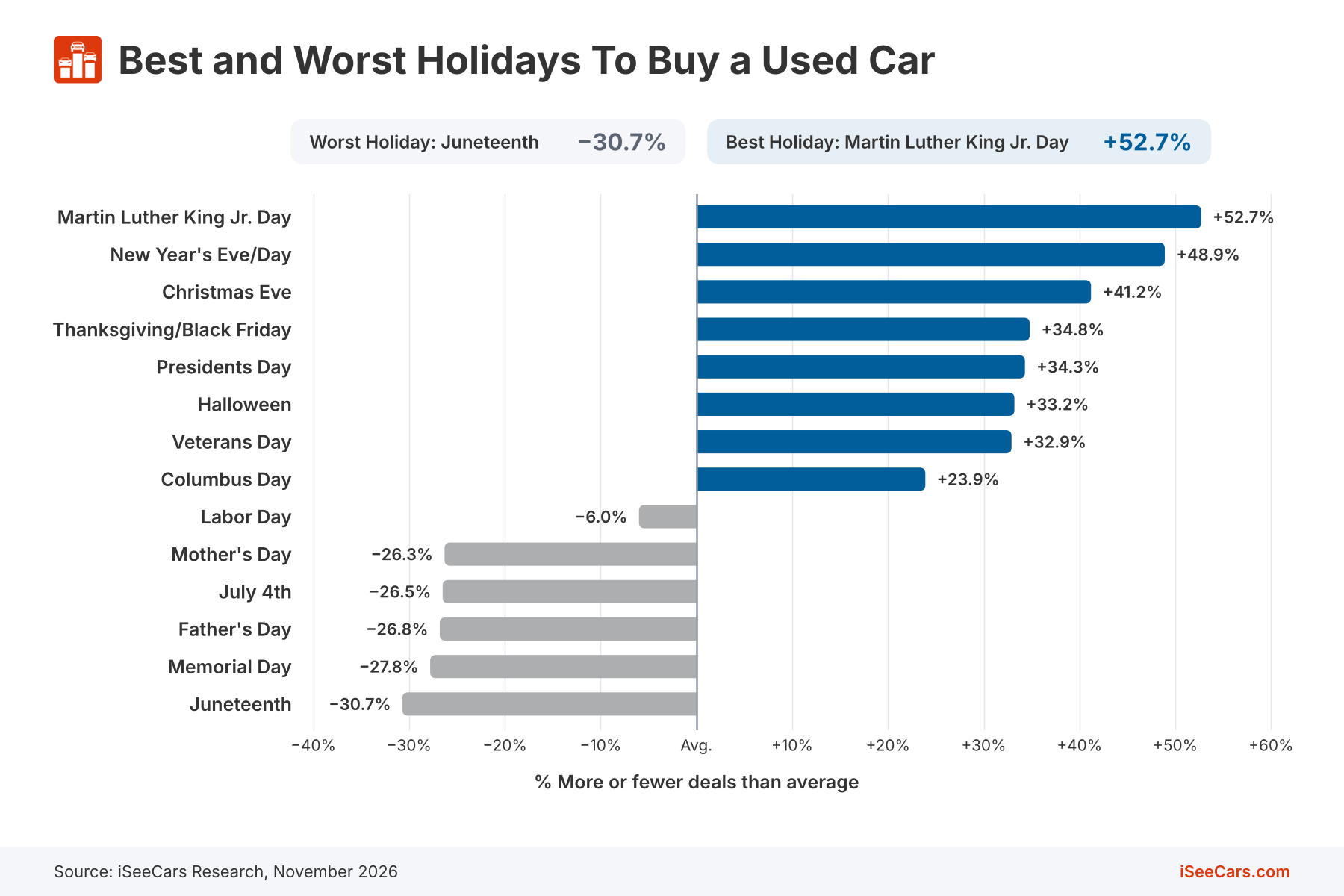
| The Best and Worst Holidays To Buy a Used Car - iSeeCars Study | ||
| Rank | Holiday | % Deals Compared to Average |
| 1 | Martin Luther King Jr. Day | 52.7% |
| 2 | New Year's Eve/New Year's Day | 48.9% |
| 3 | Christmas Eve | 41.2% |
| 4 | Thanksgiving/Black Friday | 34.8% |
| 5 | Presidents Day | 34.3% |
| 6 | Halloween | 33.2% |
| 7 | Veterans Day | 32.9% |
| 8 | Columbus Day | 23.9% |
| 9 | Labor Day | -6.0% |
| 10 | Mother's Day | -26.3% |
| 11 | July 4th | -26.5% |
| 12 | Father's Day | -26.8% |
| 13 | Memorial Day | -27.8% |
| 14 | Juneteenth | -30.7% |
Best and worst months to buy a used car
The monthly rankings show a clear seasonal progression. December leads all 12 months with 46.2% more deals than average, followed by January at 44.1%, and November at 31.7%. Beginning in April, the chances of finding a deal fall sharply. April has 21.6% fewer deals than average, May drops to 28.2%, and June reaches the lowest point of the year at 28.8%.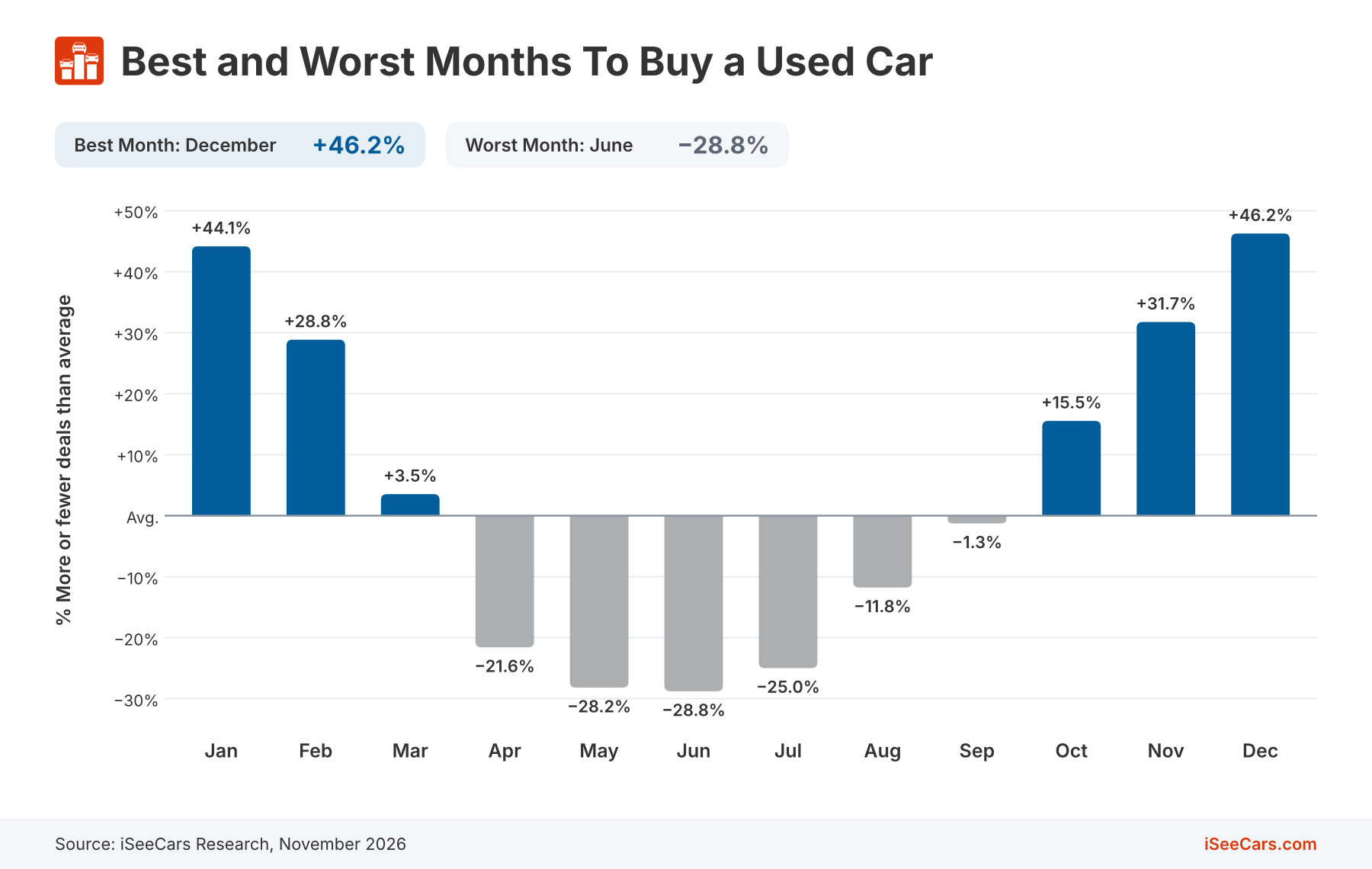
| The Best and Worst Months To Buy a Used Car - iSeeCars Study | ||
| Rank | Month | % Deals Compared to Average |
| 1 | December | 46.2% |
| 2 | January | 44.1% |
| 3 | November | 31.7% |
| 4 | February | 28.8% |
| 5 | October | 15.5% |
| 6 | March | 3.5% |
| 7 | September | -1.3% |
| 8 | August | -11.8% |
| 9 | April | -21.6% |
| 10 | July | -25.0% |
| 11 | May | -28.2% |
| 12 | June | -28.8% |
Methodology
iSeeCars Research analyzed over 42 million used car sales from 2025 through October 2026. Deals were identified based on whether the car was listed at 10% or more below iSeeCars’ estimated fair market value. The total number of listings and number of deals were aggregated nationally by month, and day of the month. In addition, the data were also aggregated for specific major holidays. At each aggregated timescale, the number of deals was divided by the number of cars sold, resulting in a probability of finding a deal. These resulting probabilities were expressed as a percentage difference from the overall probability of finding an automotive deal on an average day (11.5%).
About iSeeCars
iSeeCars helps millions of people make smarter car decisions and find the best deals by leveraging data-driven research and unbiased analysis. iSeeCars Research conducts independent studies that provide key insights on vehicles, market trends, and the automotive industry, including Best Cars Rankings and the annual Longest Lasting Cars Study. With the goal of making car shopping easier and more transparent, iSeeCars.com analyzes millions of car listings and offers valuable resources like iVIN Reports, Window Stickers, and Build Sheets. iSeeCars has saved users over $452 million using over 25 billion data points and proprietary algorithms to objectively analyze, score, and rank new and used vehicles.